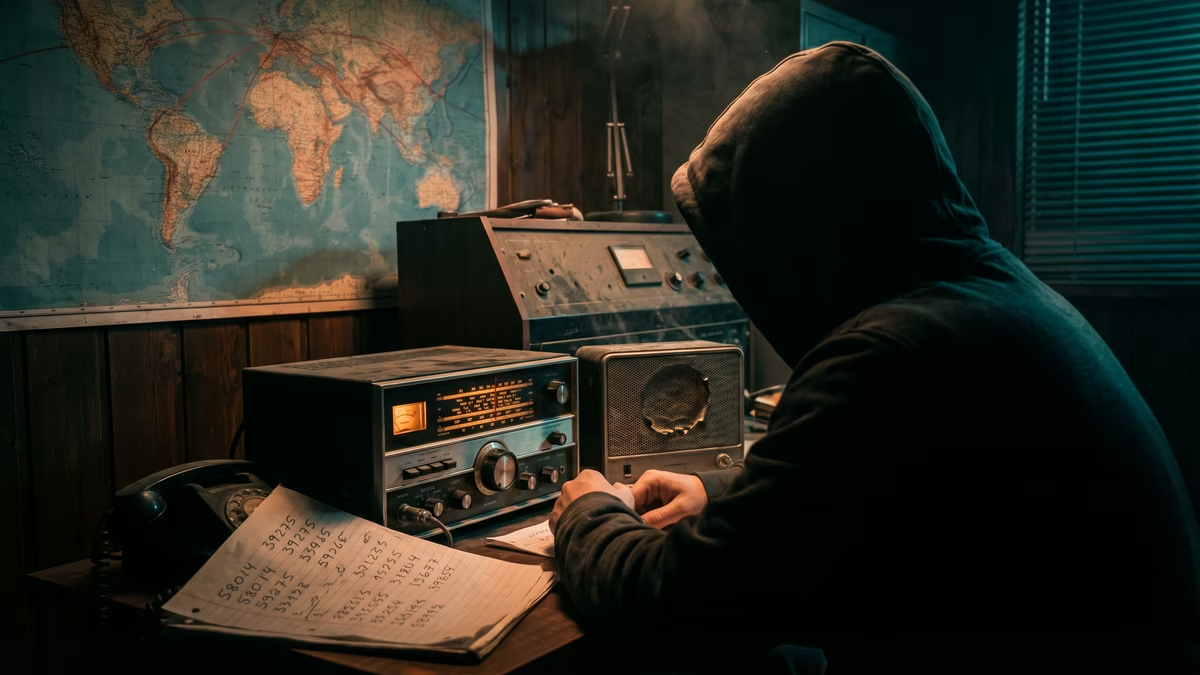
The wild part about numbers stations is that for decades, anyone with a cheap shortwave radio could hear what sounded like a robot calmly reading secret codes into the void 😱📻. And when people asked who was behind them, governments mostly hit us with the diplomatic version of: "no idea bestie" 👀.
🔥 The Creepy Hook
So basically, these broadcasts are called numbers stations: shortwave transmissions that send strings of numbers, letters, or digital tones to hidden listeners far away ⚡.
Researchers have documented them from World War I onward, and many kept going deep into the internet age 🤯. Wild, right?
📻 How This Even Worked
Here’s the thing: shortwave radio bounces off the ionosphere, which means a signal can travel crazy long distances without using a phone line or the internet 🌍.
That made it perfect for espionage. If an agent had the right schedule, the right frequency, and the right one-time pad, they could decode the message and then leave basically no digital trail 🗡️.
A one-time pad is considered mathematically unbreakable if it’s used correctly 🤯. Yes, really.
🕵️ The Story Got Very Real
This is why numbers stations are not just spooky radio fan fiction 💀. Real spy cases have pulled them out of the shadows.
Specialist archive Priyom links numbers stations to publicly prosecuted espionage cases including the Cuban Five, Ana Montes, the 2010 Russian Illegals Program, and the German couple Andreas and Heidrun Anschlag 👑.
In other words, the creepy voice on the radio was sometimes literally part of an actual spy workflow 😭. Not even joking.
🤯 The Wait, WHAT? Facts
Some famous stations opened with little tunes, like the so-called Lincolnshire Poacher and Swedish Rhapsody 🎶. Imagine getting secret instructions after what sounds like the world’s most cursed ringtone.
North Korea has broadcast coded messages disguised as lessons for "distant university students" 🫠. That is basically the ancient-cyber version of hiding your secrets in plain sight.
Anyone could hear the message, but only the intended listener with the correct key could understand it 🔥. Can you imagine stumbling onto that while casually spinning the dial?
👀 So Why the Weird Official Silence?
Because admitting a numbers station is yours would be like publicly posting your burner account password 💅. Intelligence services are not exactly famous for saying, "Yep, that haunting robot lady is ours."
Priyom notes that very few government organizations have ever released information about these broadcasts ⚔️. So even when hobbyists, historians, and signal trackers strongly suspect who ran a station, the official response is often silence, denial, or a shrug.
💀 The Twist Everyone Shares
The funniest part is that the mystery is only half real. The voices sound like horror-movie material, but the boring truth is somehow wilder: this was often just bureaucracy with static — spies getting their homework over the radio 📡😱.
That’s why numbers stations still hit so hard today. In an age of hacks, leaks, and constant surveillance, the low-tech option can still look weirdly smart.
🔥 The Takeaway
Sometimes the most unhinged thing in history isn’t a myth — it’s a government doing something deeply dramatic and then acting like it absolutely never happened.
📚 Sources & More Reading
Explaining the Mystery of Numbers Stations - War on the Rocks
Operation Ghost Stories: Inside the Russian Spy Case - FBI
The Conet Project: Recordings of Shortwave Numbers Stations - Internet Archive